Design Thinking Humanizes Data Science

NOTE: This is a re-release of a blog that I wrote in 2018.
The article “Cognitive Hub: The Future of Work” and the supporting infographic (see Figure 1) provide an interesting perspective on some “technology combinations” that could transform the workplace of the future, all enabled by Artificial Intelligence (AI):
AI + Internet of Things (IoT) yields workplace decision support
AI + Human-machine Interaction (HMI) yields augmented collaboration
AI + Cyber physical systems yields digitalization
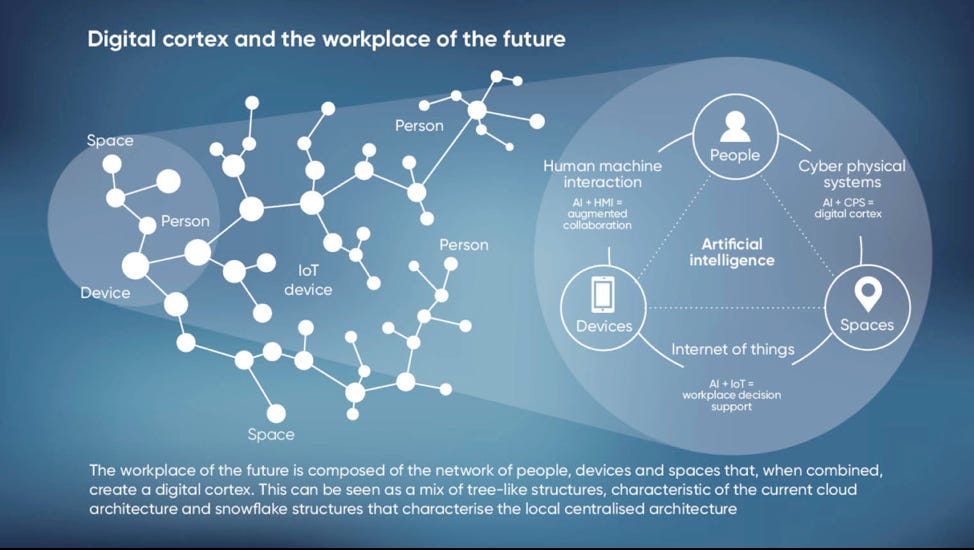
Figure 1: “Cognitive Hub: The Future of Work”
The infographic above is very cool and presents an interesting proposition. I love it. However, my concern with the proposition is that, while these technology combinations could be quite powerful, the Internet of Things, Human-Machine Interfaces, Cyber-physical systems, and Artificial Intelligence are only enabling technologies; that is, they give someone or something the means to do something. You still need someone or something to actually do something; to decide what to do, when to do it, where to do it, with whom to do it, how to do it, and what items are required to do it, etc.
There is a H-U-G-E difference between enabling and doing. For example, I can enable you with an individualized diet and fitness plan that will improve your life, but the subsequent improvement won’t happen if you are not doing it.
“Do. Or do not. There is no enabling,” to paraphrase Jedi Master Yoda.
These technology combinations are missing the glue to bind them together to ensure business success and customer and marketplace differentiation, whereby the glue is:
Data Science that seeks the variables and metrics that yield better predictors (patterns, trends, relationships, associations) of performance and operations.
Design Thinking that uncovers the analytical heuristics buried in the organization’s tribal knowledge and drives the subsequent adoption of the analytics.
Economics that identifies and captures the sources of customer, operational, and market value (wealth) creation.
At the end of the day, the organizations that win will be ones that learn how to leverage Data Science, Design Thinking, and Economics to drive the business and operational focus, and align, adopt, and monetize these enabling technology combinations.
Design Thinking and AI Research: McKinsey Meets Accenture
McKinsey (“Business Value of Design”) and Accenture (“How AI Boosts Industry Profits Innovation”) recently released separate research showing that organizations that adopt AI and Design Thinking outperform those that do not (see Figure 2).
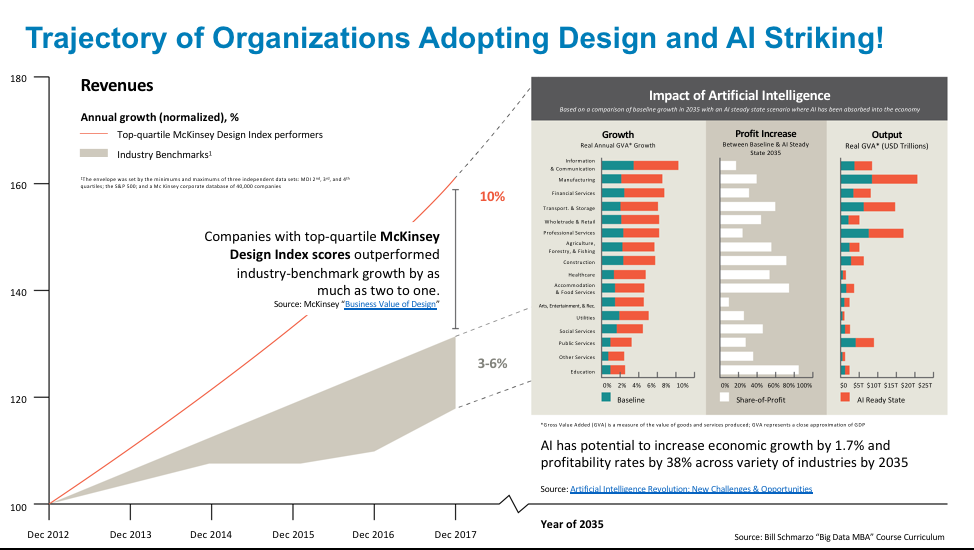
Figure 2: Design Thinking and AI Augmenting Trajectories of Organizations
We find that organizations that blend Design Thinking with Data Science are having more success – not only in the quality and accuracy of their analytic models, but equally important in the subsequent organizational alignment around and adoption of the analytic results. Both Design Thinking and Data Science discover – versus define – the criteria for success; Data Science discovers the criteria for success buried in the data (codifying trends, patterns, and relationships) while Design Thinking discovers the criteria for success buried in the human interactions (using personas, journey maps, and storyboards). See Figure 3.
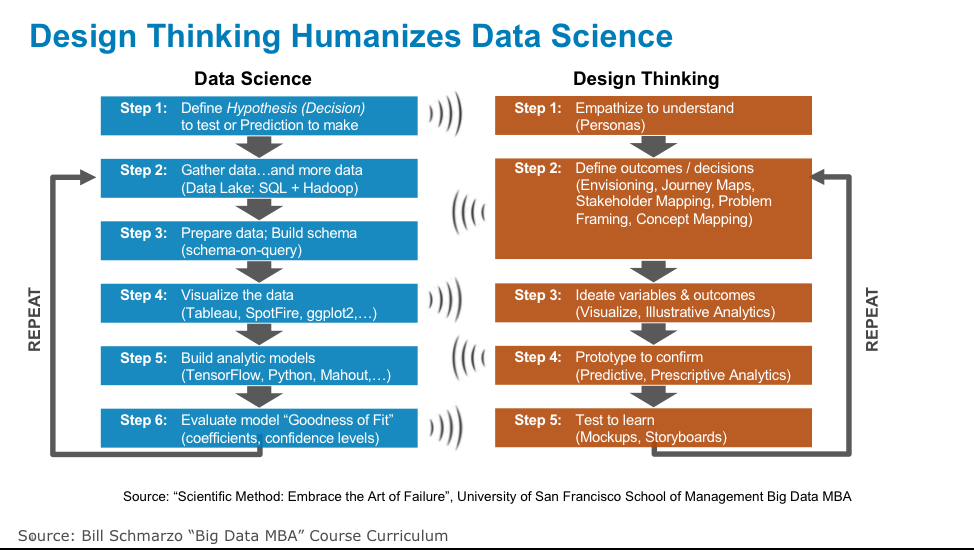
Figure 3: Design Thinking Humanizes Data Science
Common characteristics between successful Design Thinking and Data Science execution include:
Open culture for sharing and standing on the shoulders of others
Inclusive culture where “All ideas are worthy of consideration”
Learning culture through experimentation (and failure)
Willingness of culture to unlearn old methods that have been held as the gospel truth
Maybe the most important cultural similarity is the ability to embrace the mentality that if you don’t have enough “might” ideas, you’ll never have any “breakthrough” ideas.
Bending, Breaking and Blending Your Way to “Breakthrough” Ideas
In the book “The Runaway Species”, Anthony Brandt and David Eagleman propose a design creativity framework comprised of three basic techniques: bending, breaking and blending:
In Bending, an original idea or approach is modified or twisted from a multitude of different perspectives. Design helps the data scientist by bending and twisting use cases through the lenses of different stakeholders. Using personas and stakeholder maps, the data scientist is better able to examine multiple dimensions of the problem to identify potential variables and metrics that might yield better performance predictors. Bending (and twisting) the stakeholders’ perspectives can help the data scientist to thoroughly understand the business objectives, the impediments to successful execution, and the associated modeling, i.e., the risks – False Positives and False Negatives. Design brings envisioning and illustrative exercises to enhance understanding of the business and/or operational problem under consideration.
In breaking, a whole is broken down into smaller subcomponents or steps to rearrange, eliminate, re-engineer, or improve them. Design helps the data scientist by breaking down the customer's overall goal into smaller, interrelated decisions and actions. From an organizational perspective, Design brings brainstorming exercises, customer journey maps, and concept mapping to help functionally decompose the organization’s key business initiatives into the supporting use cases (identify, validate, value, and prioritize), and then the data scientist employs illustrative analytics to validate and further ideate.
In blending, two or more loosely coupled yet influential approaches or methodologies are merged to seek new synergies and drive new perspectives. Blending may be the most important technique, and Design uses storyboards, mockups, and prototypes to synthesize new potential solutions within the blended approach or methodology. Heck, this blog is using blending – the blending together of data science and design thinking approaches and methodologies – to hopefully create something new and more powerful. You are my guinea pigs!!
These three elements of creativity are found in the book “The Book of Why: The New Science of Cause and Effect” by Judea Pearl. Pearl introduces the concept of “Causal Inference,” which posits that relationships and correlations have “direction”; that is, items aren’t just correlated, but the correlations have a cause-and-effect component. For example, the sun rising and the rooster crowing have a high correlation, but it isn’t the rooster crowing that causes the sun to rise; it’s the sun rising that causes the rooster to crow. And being able to identify causal inference and the role of cause and effect is critical to ascending Pearl’s “Ladder of Causation” (see Figure 4).
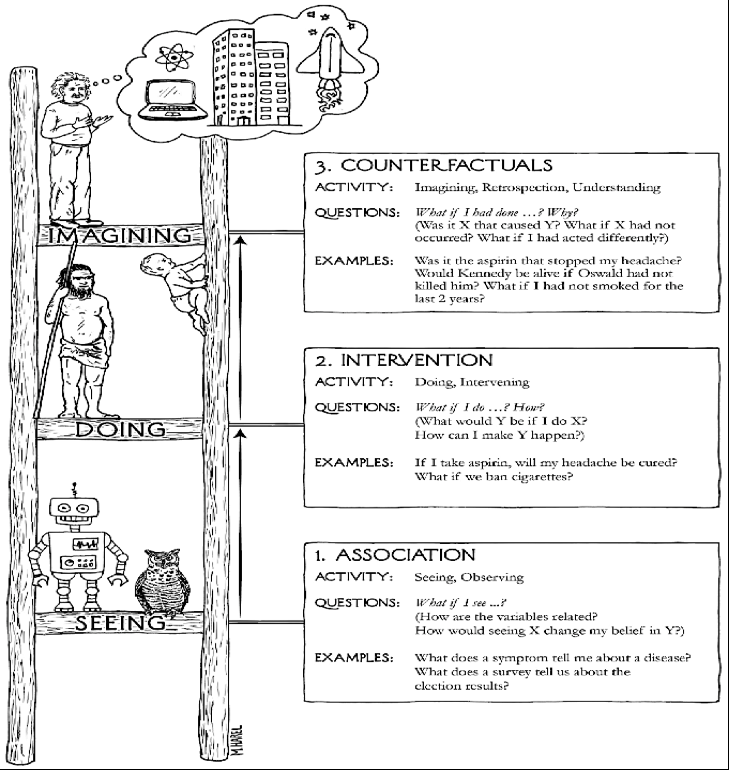
Figure 4: Judea Pearl’s Ladder of Causation. Illustrator: Maayan Harel
I summarize the rungs of Pearl’s “Ladder of Causation” as such (from the bottom rung to the top rung of the ladder):
Rung 1: Association (Seeing, Observing). Rung 1 deals with identifying regularities in past behavior. It seeks to identify and codify patterns, relationships, and associations based on past behaviors (data) to predict future behaviors (causal inference).
Rung 2: Intervention (Doing, Intervening). Rung 2 transitions from asking what happened to asking what would happen based on possible interventions or different scenarios. It seeks to leverage patterns, relationships, and associations among key entities (humans or devices) to predict outcomes and prescribe potential actions based on possible interventions (scenarios).
Rung 3: Counterfactuals (Imaging, Retrospection, Understanding). Rung 3 poses the “counterfactual” questions: what would have happened, or what different outcome might have occurred, if a different path had been taken. It seeks to leverage key entity insights (behaviors, tendencies, propensities) to envision what would have happened (potential outcomes) if a different path had been taken.
I believe that the design-inspired concepts of “Bending, Breaking and Blending” help organizations leverage data science (and the Big Data Business Model Maturity Index) to ascend the Ladder of Causation (see Figure 5).
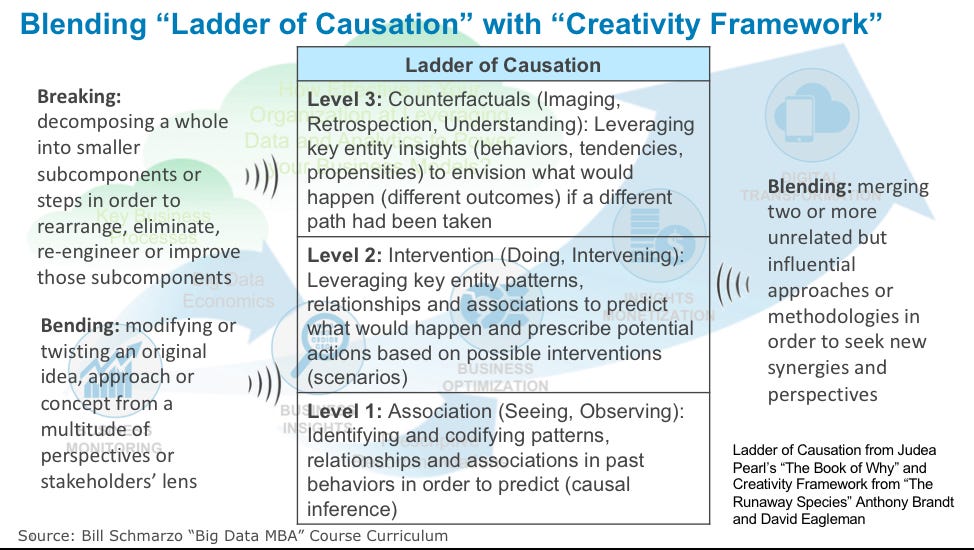
Figure 5: Blending “Ladder of Causation” with Creativity Framework” to Re-engineer Business Models
If nothing else, I am getting a chance to experience firsthand the power of blending the best ideas of industry leaders like Anthony Brandt, David Eagleman, and Judea Pearl to synergize a new framework or model.
Design Thinking Humanizes Data Science Summary
Ultimately, the ability to leverage these new, powerful technologies such as the Internet of Things, Human-Machine Interfaces, Cyber-physical systems, and Artificial Intelligence (not to mention the coming advancements enabled by Blockchain and Quantum Computers) requires the organizational glue to align, adopt, and monetize them. That means organizations will need to master the disciplines of data science, design thinking, and economics to identify and capture new sources of customer and market value creation and to re-engineer existing business models based on these new sources.
Final note: How do we ensure the highest probability of data science/analytics success? We cheat – we do all this pre-work (Envisioning, Design Thinking, Hypothesis Development, Thinking Like A Data Scientist) before we ever “put science to the data”.